







How to soften an industrial-style living room with colour and texture
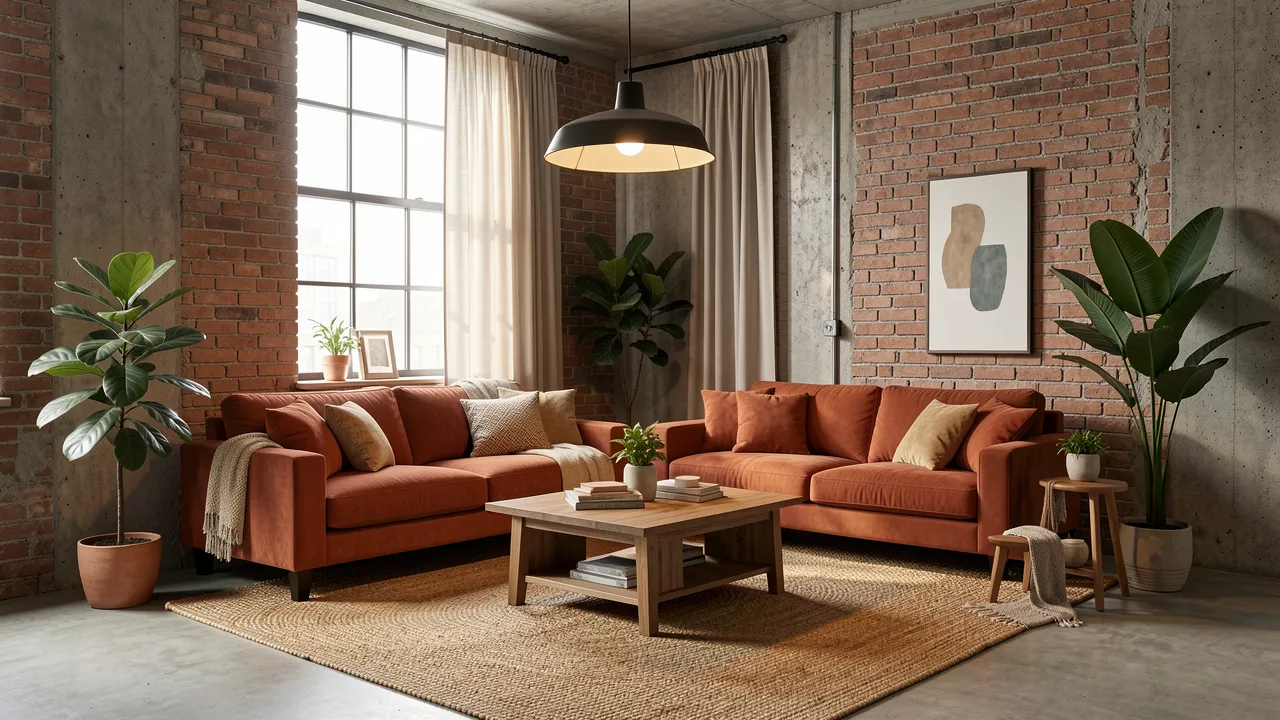
Exposed steel, concrete floors and brickwork give an industrial-style living room a distinctive architectural presence. Yet these materials can feel stark when they are left unsupported by colour, softness and personal details. By balancing raw surfaces with warm tones, tactile textiles and carefully selected furniture, you can retain the room’s character while making it more relaxing, inviting and suited to everyday life.
Start with a warm colour palette that respects raw materials
An industrial living room does not need to rely on greys, blacks and metallic finishes alone. Those foundations are often already present in the concrete, steel frames, pipes or dark window profiles. Introduce warmer shades around them to create contrast without disguising the architecture.
Earthy colours work particularly well: clay, terracotta, tobacco, muted ochre, mushroom, olive green and deep rust all bring visual warmth to cool materials. For a quieter scheme, choose warm white, putty, greige or soft taupe for large wall areas, then add richer accents through cushions, upholstery and art. These shades prevent concrete and exposed brick from dominating the room.
Industrial architecture offers useful inspiration for this balance between structure and atmosphere. Steel columns, factory-style glazing and open spans create a strong visual rhythm, while colour and surface treatments shape how welcoming that rhythm feels. Browse an inspiring world for visual references related to industrial forms, material contrasts and colour-led creative environments. Such references can help you build a decorative scheme that responds to the building’s original features rather than competing with them.
Choose colour according to the room’s light
The amount and direction of daylight should guide your palette. A north-facing room with concrete walls may benefit from cinnamon, caramel, dusty rose or warm beige. In a bright loft with large south-facing windows, olive, charcoal, indigo and aged leather can feel grounded without making the room gloomy.
Use darker shades selectively. A deep painted wall behind a sofa can add depth, especially in a large open-plan space. Keep the surrounding walls lighter so that the room still feels open.
| Existing industrial feature | Complementary colours | Suitable decorative finishes |
|---|---|---|
| Grey concrete walls | Terracotta, cream, olive, rust | Wool rugs, oak furniture, linen curtains |
| Red or brown brick | Sage, tobacco, warm white, navy | Leather seating, brass lamps, framed prints |
| Black steel frames | Sand, camel, soft blush, moss green | Bouclé cushions, pale timber, ceramic vases |
| Polished concrete floor | Ochre, taupe, deep green, burnt orange | Large rugs, velvet upholstery, woven baskets |
Use textiles and layered lighting to make hard materials feel comfortable
Textiles are often the fastest way to soften an industrial interior, especially for renters who cannot alter floors, walls or fixed structural details. Focus on layers rather than a single decorative item. A generous rug, curtains, cushions and a throw can change the perceived temperature of the entire room.
Choose a rug large enough to sit beneath the front legs of the sofa and chairs. In an open-plan living room, this creates a defined seating zone and prevents furniture from appearing scattered across a hard floor. Wool, jute, cotton flatweave and low-pile patterned rugs suit industrial settings because they bring texture without looking overly formal.
Mix fabrics with different finishes. Linen curtains diffuse daylight around metal-framed windows. Velvet or brushed cotton cushions add softness to a leather sofa. A chunky wool throw makes a streamlined metal or timber chair more comfortable. Aim for textural contrast, such as smooth leather beside nubby wool, or rough brick behind soft linen.
Build light in several layers
A single ceiling fixture can make an industrial living room feel more like a warehouse than a home. Retain a statement pendant if it suits the space, but supplement it with floor lamps, table lamps and wall lights.
Use warm bulbs, generally around 2,700 K, to soften grey surfaces and enrich earthy colours. A floor lamp beside a reading chair creates a more intimate corner. Table lamps on a console or sideboard help visually lower the scale of high ceilings. If you have exposed beams or brickwork, direct a subtle wall wash toward them to reveal texture rather than leaving them in shadow.
Layered lighting is especially effective in open-plan layouts because it separates the lounge area from the dining and kitchen zones without needing walls.
Choose furniture and wall art that add personality while preserving industrial character
Industrial rooms benefit from furniture with visual weight. A low-profile sofa in camel leather, warm grey fabric or moss-green velvet can anchor the seating area. Add timber through a coffee table, shelving unit or sideboard, preferably in oak, walnut or reclaimed wood. Wood prevents steel and concrete from feeling too uniform, while its grain brings a natural irregularity to the composition.
Avoid filling every corner with vintage factory references. Too many metal lockers, exposed-bulb lights and distressed signs can make the room feel themed rather than lived in. Instead, choose a few pieces with honest materials and simple silhouettes, then balance them with softer, more contemporary forms. A rounded armchair, curved coffee table or upholstered ottoman can offset the room’s straight structural lines.
Wall art is another powerful way to personalise an industrial interior. Large-scale abstract paintings suit expansive brick or concrete walls, while photography can complement the architecture without overwhelming it. Consider works with rust, mineral, sand or botanical tones that repeat colours used in textiles. For a more collected appearance, arrange a small gallery wall with mixed frames in black, oak and muted brass.
Keep artwork at a human scale. Very high ceilings can tempt you to hang pieces too high, but the centre of the main artwork should generally sit near eye level from the seating area. This makes the living room feel connected to its occupants rather than to the building’s volume.
A warmer industrial living room is built through balance
A successful industrial living room lets the structure remain visible while ensuring comfort is felt at every level. You do not need to conceal concrete, brick or steel. Instead, frame those elements with warm colour, generous fabrics, natural wood, gentle lighting and artwork that reflects your own taste.
- Use earthy, muted colours to counterbalance grey concrete and black steel.
- Ground an open-plan seating area with a large rug and substantial furniture.
- Combine linen, wool, leather, velvet and woven fibres for comfortable visual depth.
- Add several light sources with warm bulbs instead of relying only on overhead fixtures.
- Select wall art and accessories that repeat your palette and make the room personal.
- Preserve a few raw architectural features, so the space keeps its industrial identity.