






Telecom tower corrosion inspection and maintenance
Telecom towers operate under constant exposure to rain, wind, salt, pollutants, ultraviolet light and changing temperatures. Over time, these conditions can weaken protective coatings and trigger corrosion on steel members, bolts, ladders, platforms and ancillary equipment. A structured inspection and maintenance programme helps you preserve structural integrity, reduce unplanned repairs and protect the availability of the network equipment mounted on the structure.
Corrosion develops where protection breaks down
Most telecom towers use galvanised steel, painted steel or a combination of both. Galvanising provides a zinc layer that protects the underlying steel, while paint systems add another barrier against moisture and contaminants. Neither system is permanent, particularly where coatings are damaged during installation, modifications or routine access.
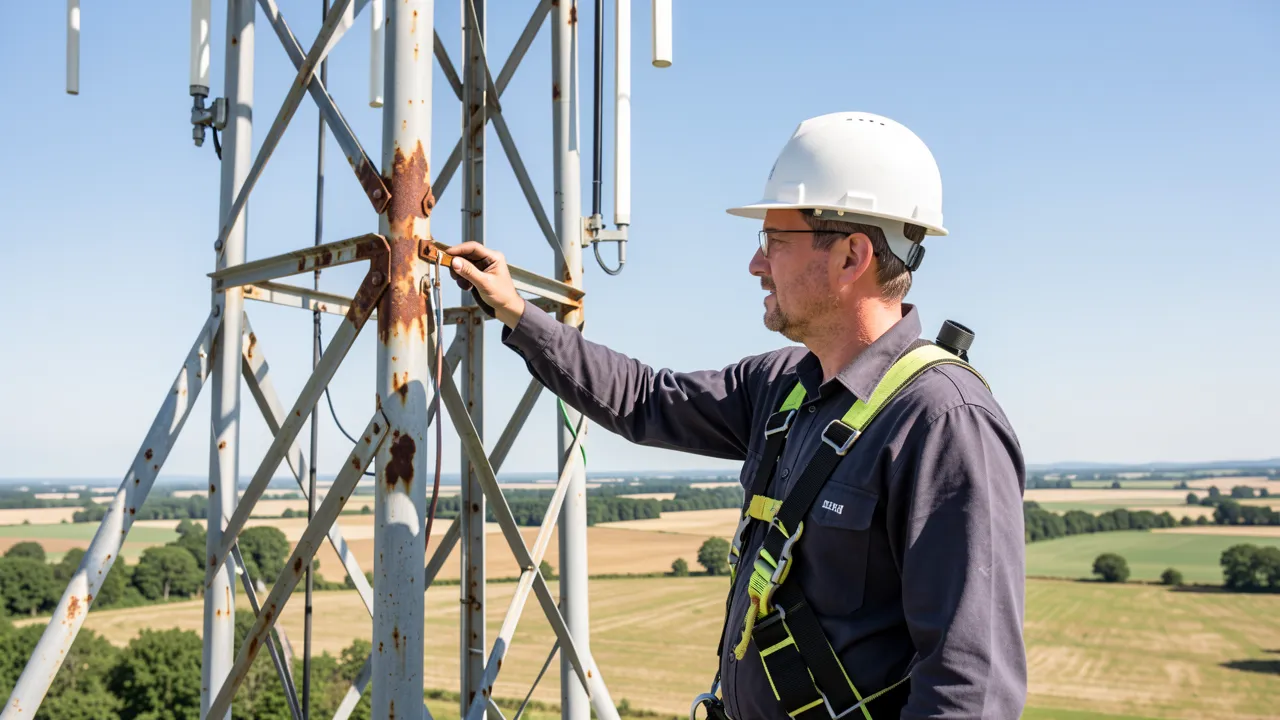
Corrosion commonly starts at joints, bolt connections, welds, cut edges and areas where water can collect. Guyed structures may also experience deterioration at anchor rods, turnbuckles and cable attachment points. On monopoles and lattice towers, trapped moisture inside hollow sections can create hidden internal corrosion.
Environmental conditions shape the rate of damage. Coastal installations face airborne salt, industrial areas may contain corrosive pollutants, and rural sites can suffer from persistent moisture, vegetation growth and poor drainage. You should assess each site according to its actual exposure rather than applying one inspection interval to every tower.
Early warning signs deserve prompt attention
Surface rust is not always cosmetic. Rust staining around bolts can indicate water ingress at a connection, while blistering paint may suggest corrosion beneath the coating. Other warning signs include:
- White zinc corrosion products on galvanised surfaces
- Flaking, cracking or peeling paint
- Pitting on steel sections and fasteners
- Loose, seized or heavily rusted bolts
- Damaged cable trays, handrails and climbing fixtures
- Standing water around base plates or foundation interfaces
A visual survey from ground level is useful, but it cannot replace close inspection of elevated connections and difficult-to-access areas.
Inspection planning should reflect tower design and exposure
A reliable programme starts with an asset register containing tower type, height, location, construction date, coating system, previous repairs and antenna loading records. This information allows you to set priorities and identify structures with a greater likelihood of deterioration.
Inspection frequency should increase for coastal, high-humidity and industrial locations. Towers supporting frequent equipment upgrades also require closer attention, as contractors may damage coatings or introduce incompatible metals during installation work. When reviewing loading changes, the wind actions affecting the structure should be considered alongside corrosion condition. Guidance on Telecom masts and towers for UK sites can support broader structural planning.
A thorough inspection combines several methods
Routine inspections generally involve visual checks, photographs and condition ratings. Inspectors should record the location, extent and apparent severity of corrosion, rather than noting a vague description such as “minor rust”.
Where deterioration is suspected, more detailed techniques may be appropriate. Ultrasonic thickness testing can measure remaining steel thickness in selected members. Coating thickness gauges help assess paint systems, while torque checks may identify compromised fasteners. Drone surveys can provide valuable imagery of upper sections, though they should complement, not replace, hands-on examination where close assessment is necessary.
Access safety remains central to every survey. Competent personnel should use appropriate climbing systems, rescue arrangements and exclusion zones. If the tower condition raises doubts about safe access, a structural engineer should review it before work proceeds.
Maintenance work must address the cause as well as the visible damage
Effective corrosion maintenance is more than applying paint over rust. The affected area should be cleaned and prepared to the specified standard, with loose corrosion removed and the substrate assessed for section loss. The repair system must suit the existing galvanising or paint coating and the local environment.
For limited damage to galvanised steel, zinc-rich repair materials may restore protection after suitable surface preparation. Larger affected areas may need abrasive blasting and a full multi-coat protective system. Where corrosion has reduced member thickness, weakened a connection or distorted a component, repair painting alone is not sufficient. You may need to replace bolts, braces, ladders, platforms or structural members under an approved engineering design.
Fabrication quality matters when replacement steelwork is required. Uk steel fabrication standards for telecom structures provides useful context on the controls that help new or repaired components meet the demands of telecom use.
Drainage and material compatibility reduce future deterioration
Many recurring problems arise from water retention. Maintenance teams should clear debris from platforms, check drain holes in monopoles, correct poorly routed cables and remove vegetation that holds moisture against the structure. Base areas also need attention, especially where soil, gravel or site surfacing has built up around steelwork.
Material compatibility is another practical concern. Direct contact between dissimilar metals can promote galvanic corrosion when moisture is present. Use suitable isolators, coatings or approved fastening arrangements when adding brackets, antenna mounts or cable support systems.
Foundation interfaces require regular checks
Corrosion at the bottom of a tower can be difficult to spot because it may occur near ground level, beneath covers or around the concrete interface. Inspect base plates, holding-down bolts, anchor cages and grout for rust, cracking, movement or water accumulation. For guyed towers, examine guy anchors and exposed rods with the same care.
Any indication of settlement, cracking or degraded anchors requires a wider assessment of the supporting system. The principles in Choosing foundations for telecom tower installations can help you understand how ground conditions and foundation selection affect long-term tower performance.
A documented programme protects the asset over its working life
Inspection findings should lead to clear actions, assigned responsibilities and realistic completion dates. Keep photographs before and after repairs, coating specifications, thickness readings, engineering reports and records of replaced components. This history supports future condition assessments and helps you budget for renewal before defects become urgent.
Key points to retain are:
- Inspect high-risk locations more frequently, especially coastal and industrial sites.
- Record corrosion by location, severity and component type.
- Repair damaged coatings only after appropriate surface preparation.
- Investigate steel section loss and connection damage with engineering support.
- Keep water, debris and vegetation away from tower steelwork.
- Maintain complete inspection and repair records for every structure.
Protecting telecom tower reliability through planned care
Corrosion cannot be eliminated entirely, but it can be managed through informed inspection, timely repairs and sound site housekeeping. By treating coating damage, drainage issues and structural deterioration as connected maintenance concerns, you can extend tower service life, support safe access and reduce disruption to critical telecommunications infrastructure.