Fire protection options for structural steel

Structural steel offers high strength, efficient spans and flexible design options, but its performance changes rapidly when exposed to fire. Steel does not burn, yet it loses load-bearing capacity as temperatures rise. Without suitable protection, beams, columns and connections may deform or fail long before a fire is brought under control. Selecting the right system requires a clear view of the building’s use, fire strategy, steel geometry, environment and maintenance expectations.
Fire resistance begins with an informed structural assessment
A fire protection specification should start with the required fire resistance period, often 30, 60, 90 or 120 minutes. This requirement may be driven by building regulations, insurer standards, occupancy type, evacuation plans and the role of the member within the structural frame.
The section factor, sometimes called the Hp/A ratio, has a major influence on protection thickness. It compares the heated perimeter of a steel member with its cross-sectional area. Small, exposed sections heat up more quickly than large members with a lower section factor. Engineers use this value to determine the tested thickness of intumescent coating, board protection or sprayed materials.
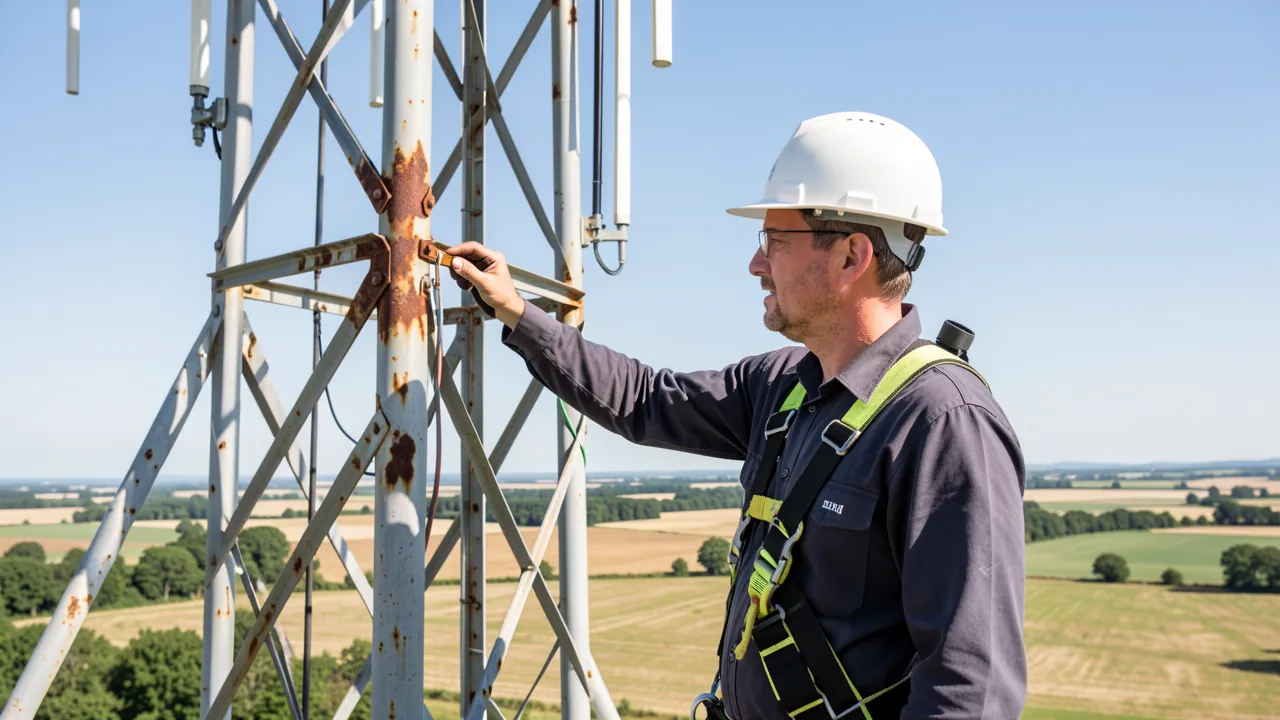
The structure itself also affects the choice. Open steel frames, cellular beams, hollow sections and complex connections require products that can reach all vulnerable surfaces. If your design includes roof-mounted equipment or communications infrastructure, the loading principles discussed in Telecom masts and towers for UK sites can support wider thinking about steel member capacity and exposure.
A suitable solution must protect more than the main beams and columns. Brackets, connection plates, stiffeners and supporting members can become weak points where fire protection is incomplete.
Intumescent coatings provide a slim architectural finish
Intumescent paint is a widely used passive fire protection system for exposed structural steel. During a fire, the coating expands to form an insulating char. This char slows heat transfer into the steel, helping the member retain its strength for the specified period.
This option is particularly attractive where the steelwork remains visible. Offices, atriums, transport buildings, retail spaces and cultural venues often use intumescent coatings because they preserve the appearance of the frame. They can be finished in a range of colours and topcoats, subject to the manufacturer’s tested system.
Application quality has a direct effect on performance. The steel surface must be prepared correctly, primers must be compatible with the coating, and the dry film thickness must match the specification. Thickness checks should be recorded throughout the works. A coating that appears visually complete may still underperform if it is too thin around edges, corners or connection details.
Environmental conditions also matter. Some products are intended only for dry internal settings, while others can be specified for semi-exposed or external use with approved protective topcoats. Your project team should check resistance to humidity, ultraviolet exposure, impact and cleaning regimes before finalising the system.
Board systems protect steel in demanding building environments
Fire protection boards create an enclosing barrier around structural steel. They may be formed from calcium silicate, gypsum-based materials, vermiculite or other tested compositions. Boards are mechanically fixed to create a boxed enclosure, with joints, fixings and perimeter details installed according to the approved design.
Fire protection boards are useful where a robust, predictable finish is needed. They can suit plant rooms, service areas, industrial buildings and concealed structural zones. They may also be practical for larger members that require substantial protection thicknesses.
The design must account for access requirements. Where cables, trunking, ducts or other services pass close to protected steel, poor routing can damage boards or leave gaps around penetrations. Guidance on Safe cable routing for telecom sites offers relevant considerations for maintaining separation, access and orderly service installation in technical environments.
Board systems can add visual bulk, particularly around narrow columns or intricate connections. Their success depends on accurate cutting, secure fixing and careful treatment of joints. Any later alteration, such as adding pipework or drilling through an enclosure, should be reviewed and repaired using compatible methods.
Sprayed protection suits large and concealed steel frames
Spray-applied fire-resistive materials, often described as SFRM, are commonly used for large-scale commercial and industrial projects. These products are sprayed directly onto prepared steel to form an insulating layer. Cementitious and vermiculite-based formulations are among the available options.
This method can provide an economical answer for extensive areas of concealed steelwork. It is especially suited to soffits, floor beams, roof structures and service zones where appearance is secondary to performance. The coating can follow irregular shapes more easily than board systems, although application around congested services still needs planning.
Surface preparation remains vital. Dust, oil, loose corrosion products and incompatible primers can reduce adhesion. The applicator should control thickness, density and curing conditions, while the contractor protects completed work from impact and moisture during the construction phase.
Corrosion protection and fire protection should be coordinated rather than treated as separate packages. For teams developing materials knowledge, Chemistry studies for corrosion control careers provides useful background on how protective systems interact with steel surfaces and environmental exposure.
Encasing methods can deliver durable fire protection
Concrete encasement, masonry surrounds and concrete-filled hollow sections provide another route to fire resistance. These approaches use mass and low thermal conductivity to delay heating of the steel. They can be highly durable, particularly in heavy industrial settings, infrastructure works and structures exposed to mechanical damage.
Concrete-filled tubular columns can combine structural efficiency with inherent fire performance. However, their design must consider moisture, connection detailing, reinforcement where required and the fire behaviour of the complete assembly. Concrete encasement adds weight and may increase foundation demands, so it is usually assessed early in the structural design.
Where electrical equipment and added services are planned near protected members, load growth should be checked before alterations proceed. Electrical load calculations for telecom site upgrades highlights the value of assessing capacity before site changes introduce additional demands.
Effective maintenance protects the original fire strategy
Fire protection is not a fit-and-forget measure. Building alterations, accidental damage, leaks, corrosion and unauthorised penetrations can reduce performance over time. A maintenance plan should identify protected steel, record the installed system and define inspection intervals.
Key points for your fire protection strategy include:
- Match the system to the required fire resistance period and section factor.
- Specify products tested for the steel shape, orientation and exposure conditions.
- Coordinate fire protection with corrosion control, services and structural connections.
- Use trained installers and retain thickness, inspection and repair records.
- Inspect protected steel after refurbishment, service installation or impact damage.
- Repair defects with compatible, approved materials.
Selecting fire protection for long-term steel performance
The best fire protection option balances compliance, appearance, durability, programme constraints and whole-life maintenance. Intumescent coatings suit visible steelwork, boards create dependable enclosures, sprayed materials cover large concealed frames efficiently, and encasement methods offer robust protection in demanding conditions. By involving structural engineers, fire specialists, architects and installers early, you can protect the steel frame while supporting the practical needs of the finished building.