






Chemistry studies for corrosion control careers
Steel structures, pipelines, storage tanks and fabricated equipment are expected to withstand demanding operating conditions for years. Yet moisture, dissolved salts, oxygen, acids and process fluids can slowly alter their surfaces and reduce their performance. Corrosion control is rooted in chemistry because degradation begins with reactions at the material and environment interface. For anyone considering a role in industrial durability, chemistry studies provide a strong route into testing, coating selection and asset protection.
Corrosion begins with chemical and electrochemical reactions
Corrosion is often treated as a maintenance concern because its visible effects include rust, pitting, leaks and coating failure. Maintenance teams repair damaged areas, replace components and schedule inspections. However, effective prevention depends on understanding why a reaction started, how quickly it can progress and which conditions accelerate it.
Steel corrosion commonly involves an electrochemical cell. One area of a metal surface acts as an anode and releases iron ions, while another area acts as a cathode where oxygen reduction may occur. Water or moisture supplies the electrolyte needed for ion movement. Chlorides from marine air, de-icing salts or industrial residues increase conductivity and can break down protective surface films.
A chemistry-based assessment considers factors such as:
- metal composition and microstructure;
- pH, temperature and oxygen availability;
- concentration of chlorides, sulphides or acids;
- electrical contact between dissimilar metals;
- coating chemistry, surface preparation and curing conditions.
This approach helps industrial teams distinguish between general rusting, galvanic corrosion, crevice corrosion, stress corrosion cracking and localised pitting. Each mechanism requires a different response, from material substitution to cathodic protection or a revised coating system.
Chemistry training connects laboratory knowledge with industrial materials
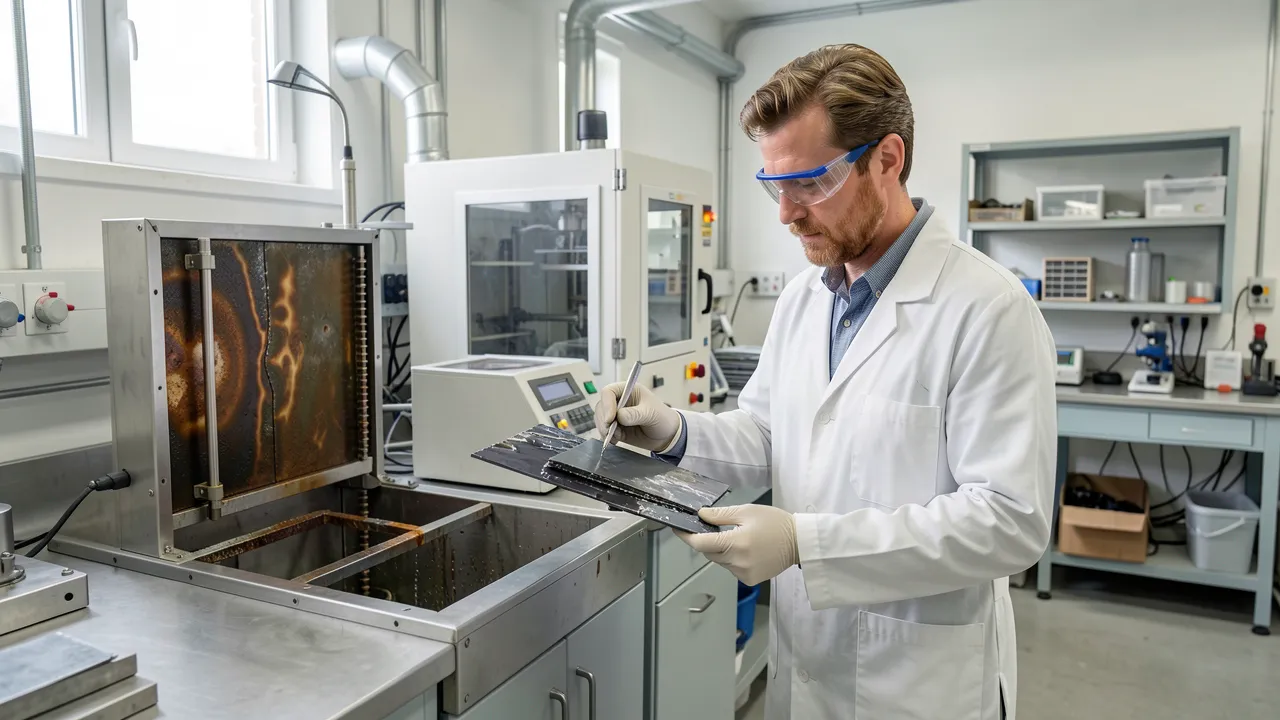
Students exploring chemistry pathways can use a practical training guide to identify programmes that develop laboratory and analytical skills. Chemistry education commonly covers inorganic chemistry, organic chemistry, physical chemistry, instrumental analysis and reaction kinetics. These subjects support work with metallic alloys, polymer coatings, solvents, inhibitors and industrial process fluids. Laboratory training also develops safe handling practices, measurement discipline and clear reporting, all of which are relevant to materials and industrial-analysis roles.
Chemistry studies develop practical tools for materials analysis
A chemistry curriculum does more than explain reactions from textbooks. It trains students to form hypotheses, prepare samples, select suitable methods and interpret results with appropriate caution. Those habits are directly useful when investigating a corroded flange, a failed coating or an unexpected loss of wall thickness in a pipeline.
Analytical chemistry is particularly valuable in corrosion control. Technicians and specialists may measure chloride levels in deposits, determine the pH of process water, analyse dissolved metals, or identify contaminants trapped beneath a protective coating. Techniques can include titration, spectroscopy, microscopy, chromatography and electrochemical measurement.
Materials chemistry also supports the selection and qualification of protective systems. A coating is not simply paint applied to steel. Its performance depends on resin type, pigments, additives, film thickness, adhesion, permeability and resistance to ultraviolet exposure, abrasion or chemicals. Epoxy, polyurethane, zinc-rich primer and fluoropolymer systems have different properties and suitable service conditions.
Surface preparation is equally chemical and physical. Oil, mill scale, soluble salts and oxidation products can prevent a coating from bonding correctly. Testing may include adhesion checks, dry film thickness measurements, salt contamination assessment and accelerated exposure trials. Reliable results depend on controlled sampling and documented procedures, especially when decisions affect high-value assets or workplace safety.
Corrosion specialists work across several industrial teams
Corrosion control rarely sits with one department. Chemistry-trained professionals work alongside mechanical engineers, welding inspectors, coating applicators, quality managers and health and safety teams. Their role is to translate laboratory data and field observations into practical recommendations.
In a fabrication workshop, a materials technician may assess whether incoming steel meets a specified grade and whether surface conditions are suitable for coating. At a refinery or chemical plant, a corrosion analyst may review fluid chemistry, monitor inhibitor performance and investigate deposits from a process line. In infrastructure maintenance, inspectors can combine visual observations with thickness data and laboratory findings to prioritise repairs.
Communication matters in these settings. A useful report identifies the material, operating environment, observed damage, test method, limitations and recommended action. It should be understandable to both technical specialists and managers responsible for schedules, budgets and risk controls.
Several careers combine chemistry with industrial asset protection
Chemistry studies can lead to a range of positions in laboratories, manufacturing facilities, inspection companies and asset-management organisations. The most suitable route depends on whether you prefer hands-on testing, research, field inspection or quality coordination.
-
Materials testing technician: You may prepare metal, coating or deposit samples for analysis. Duties can include hardness testing, thickness measurement, salt analysis, microscope examination and maintaining laboratory records. This role suits people who value precise procedures and regular use of testing equipment.
-
Coatings laboratory analyst: You may evaluate primers, topcoats, solvents and protective linings before they are approved for industrial service. Work can involve viscosity testing, adhesion trials, chemical resistance checks and failure analysis after exposure to heat, moisture or corrosive media.
-
Corrosion monitoring technician: You may collect water, soil or process-fluid samples and support the use of probes, coupons and electrochemical monitoring tools. Results can guide inhibitor dosing, inspection intervals and maintenance planning for pipelines or industrial equipment.
-
Quality control specialist in fabrication: You may verify material certificates, assess surface preparation, check coating thickness and confirm that procedures meet project specifications. Close coordination with welders, painters and inspectors is common in this role.
-
Industrial asset protection consultant: With further experience, you may advise clients on material selection, corrosion-management plans and long-term durability strategies. This work combines technical judgement, reporting skills and an understanding of operational constraints.
Chemistry skills can strengthen long-term steel durability
Corrosion cannot be managed only after visible damage appears. Early testing, suitable materials, correct surface preparation and well-chosen protective systems can extend service life and reduce unplanned shutdowns. Chemistry training gives you a framework for examining evidence rather than relying on assumptions.
For industrial organisations, that expertise supports safer equipment, more dependable structures and better use of maintenance budgets. For students and career changers, it opens a path into a field where laboratory science has a direct effect on the reliability of steel assets and industrial operations.